Henri NOUVEAU
French Hungarian


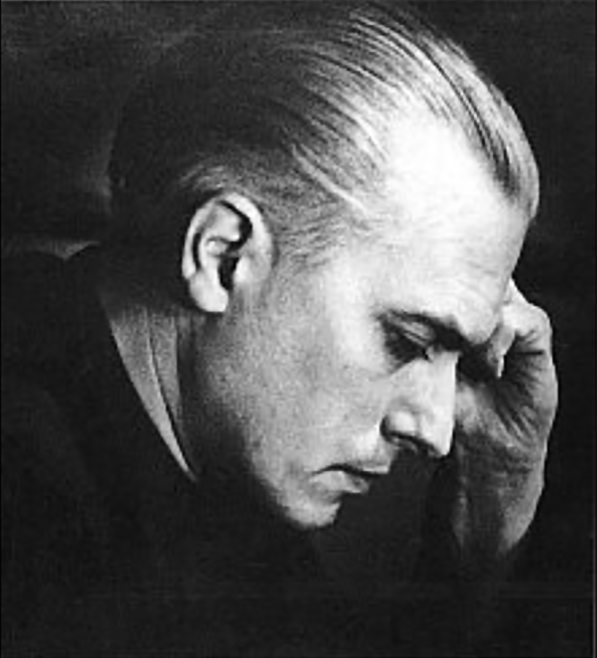
Henrik Neugeboren (artist name Henri Nouveau) was born in Kronstadt, Transylvania, which at the time belonged to Austria-Ungarn. He grew up largely in Budapest and then studied piano and composition at the Musikhochschule in Berlin from 1921-1925. After this he continued his education in Paris with Nadia Boulanger from 1925-1927.
From 1927 he spent some time in Berlin again, where he also had many contacts with the Bauhaus in Dessau. In 1929 he moved permanently to Paris where he continued to work and live until his early death in 1959. In addition to his music, Henrik Neugeboren was also active as an artist under the name Henri Nouveau.
In 1930 he exhibited for the first time, incidentally on the intercession of Theo van Doesburg. Later, in 1949, Francis Picabia invites him to another exhibition.
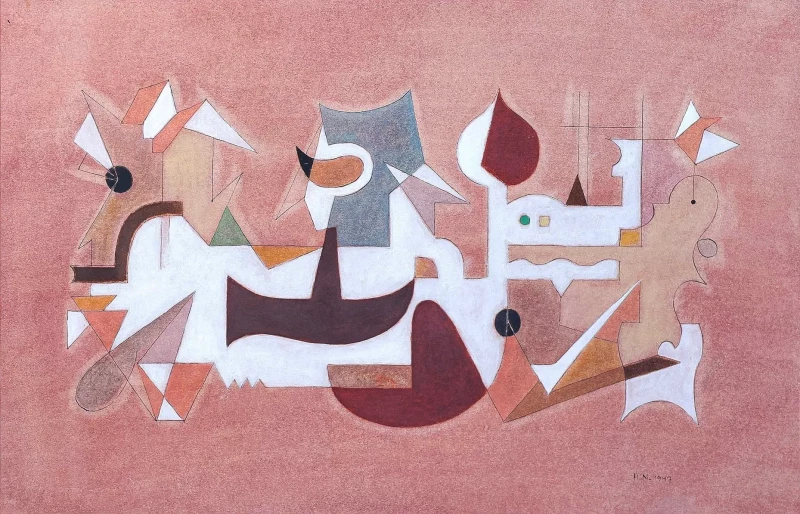
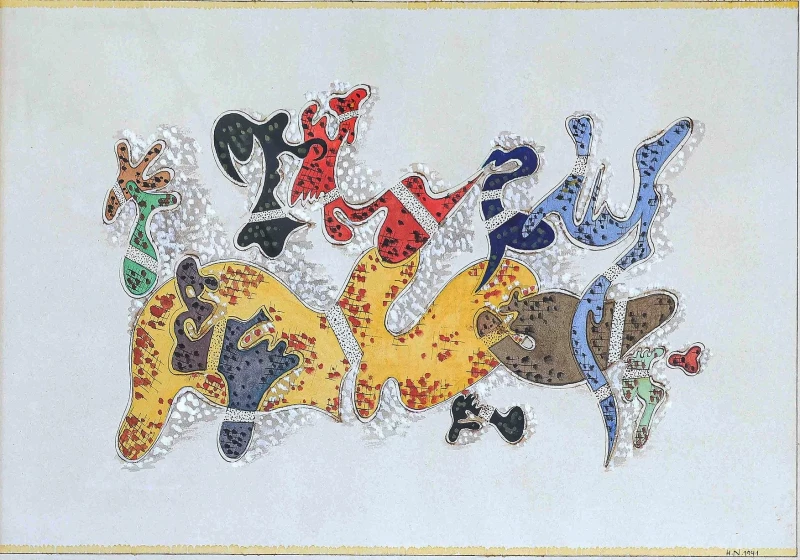
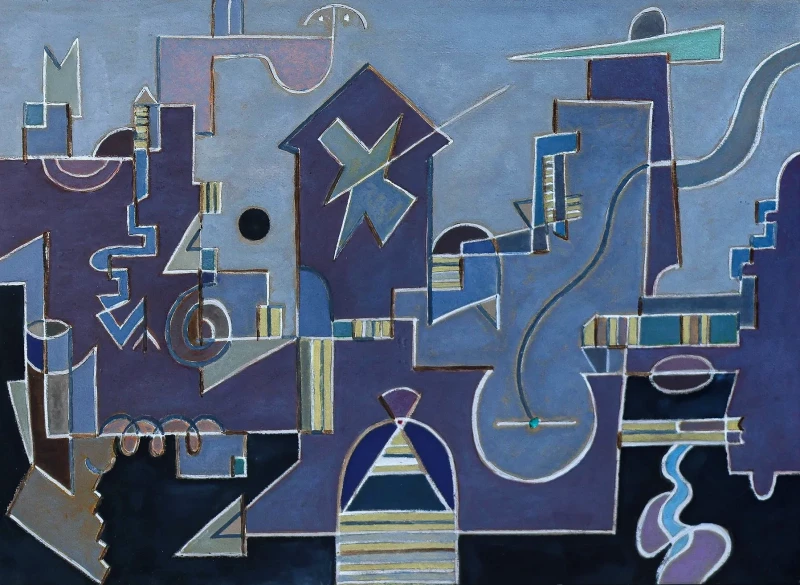
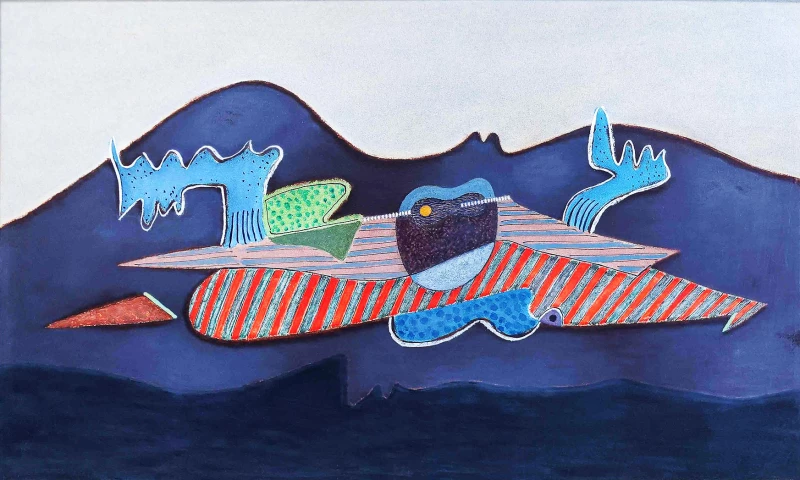
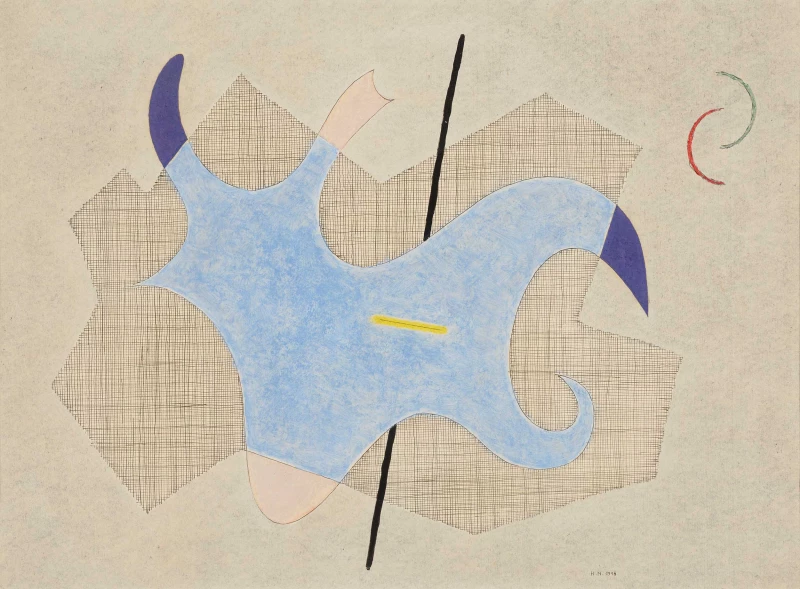
He already made non-figurative work in the 1920s, after a short surrealistic period he continues to work in an abstract-geometric style, often incorrectly called cubist.
With this work Neuborn, under the chosen artist name "Henri Nouveau", gained international recognition. He exhibits in Parisian galleries and in countries such as Italy, the Netherlands (Stedelijk Museum, 1961), Switzerland, Germany and Sweden.
Musée Picasso in Antibes devoted an entire retrospective exhibition to his work in 1989. His works can also be found in various museums such as Musée d'Art Moderne and Pinakothek München.
In addition to his music, his body of work consists of 50 works, mainly chamber music, and his works of art, he also wrote several art-theoretical essays, aphorisms, diaries and literary treatises.