

HANTAI 100
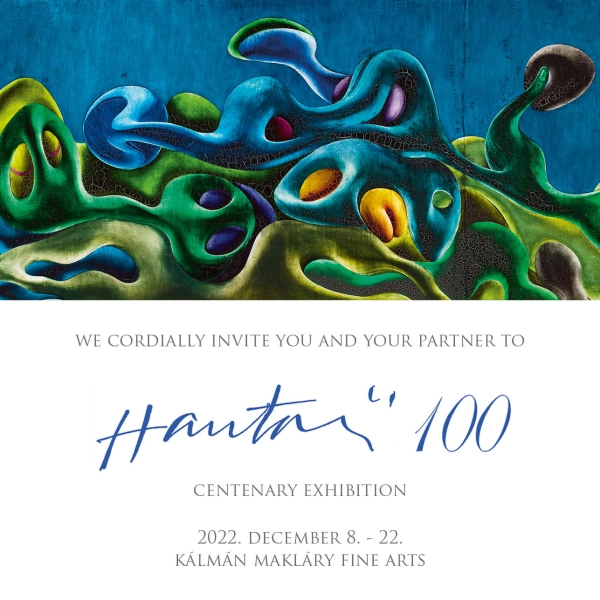
December 8-án Hantai Simon születésének 100. évfordulója alkalmából kiállítás nyílik a Kálmán Makláry Fine Arts Galériában. A közel 20 művet bemutató tárlaton négy alkotás először látható Magyarországon.
A centenáriumi tárlaton a hangsúly az ötvenes évekbeli alkotásokon lesz. Az erőteljes színvilágú, fantasztikus lényekkel, organikus formákkal, biomorf alakzatokkal gazdagított szürrealista képei közül kettő is szerepelt Hantai első párizsi tárlatán, melyet André Breton a szürrealizmus atyja rendezett, és röviddel Hantai Párizsba érkezése után mutatott be. A folyamatos kísérletezés eredményeként szakított a szürrealistákkal, alkotásai egyre erőteljesebben gesztusokká váltak, Hantai az absztrakt expresszionizmus felé fordult. A tárlat jól tükrözi a két korszak közötti átmenetet. A hatvanas évektől visszanyúlt a kezdetekhez, újragondolva, tökéletesítve azt, ezáltal létrehozva saját technikáját a “pliage”-t. A vászon hajtogatásával, gyűrésével, csomozásával és festésével hatalmas felületeken Hantai kilenc egymástól jól elkülöníthető korszakot hozott létre. Ezek közül a Mariales-, a Catamurons- és a Tabulas-sorozat egy-egy darabja látható a tárlaton.
A KMFA Galéria “Hantai 100” című kiállítása a Szépművészeti Múzeum saját gyűjteményes anyagából rendezett kiállítással egyidőben látható, mintegy kiegészítve a páratlan életművet.
A galériában szereplő alkotások közül néhány darabot még soha nem látott a közönség. Az életmű kiindulópontjaként a Képzőművészeti Főiskolán készült figurális kisméretű pasztelljével indul a tárlat. Hantai is, mint kortársai közül sokan, - pl. a galéria vezető művésze Reigl Judit -, sorozatokban alkotott, mindig kísérletezve különböző anyagokkal, technikákkal.
Hantai festményei a világ vezető múzeumait és meghatározó magángyűjteményeit gazdagítják. Idén májusban a centenárium alkalmából 130 alkotását mutattak be a párizsi Louis Vuitton Fondation emblematikus épületében Anne Baldessari kurátor vezetésével. A művészt 2019 óta a világ egyik leghíresebb magángalériája Gagosian képviseli, new york-i és párizsi kiállítótermében nyíltak tárlatai a 100. évforduló tiszteletére.
A Kálmán Makláry Fine Arts Galéria 2005 óta mutatja be rendszeresen hazai és nemzetközi kiállításokon Hantai alkotásait. A KMFA adta ki a művész három nyelvű gazdagon illusztrált 680-as oldalas monográfiáját.
Hantai 100: Celebrating the Centenary of Simon Hantaï
On the occasion of the centenary of the birth of Simon Hantaï, the Kalman Makláry Fine Arts Gallery presents Hantai 100, a major exhibition dedicated to one of the most influential figures of post-war European art. Opening on 8 December, the exhibition brings together nearly twenty works spanning key moments of Hantaï’s artistic development, including four paintings presented in Hungary for the first time.
The exhibition focuses primarily on the pivotal decade of the 1950s, a formative period during which Hantaï emerged as one of the most original voices within the Parisian avant-garde. Among the works on view are rare examples of his early Surrealist paintings, populated by fantastical beings, organic forms, and biomorphic structures animated by a vivid and intensely personal chromatic language. Two of these works were included in Hantaï’s first Paris exhibition, organized by André Breton shortly after the artist’s arrival in France—an event that marked Hantaï’s entry into the international artistic discourse of the post-war period.
Yet Hantaï’s career was defined by continuous experimentation and a refusal of artistic orthodoxy. Gradually distancing himself from Surrealism, he developed an increasingly gestural visual language that brought his work into dialogue with Abstract Expressionism and the broader search for new forms of abstraction. The exhibition traces this crucial transition, revealing an artist in constant pursuit of new possibilities for painting.
From the 1960s onward, Hantaï returned to fundamental questions of image-making and process, ultimately developing the technique that would become synonymous with his name: the pliage. Through the folding, crumpling, knotting, and painting of canvas, Hantaï transformed the act of painting into a radical exploration of chance, structure, and space. Over the following decades, this method generated a succession of distinct and groundbreaking series that redefined the relationship between gesture and composition. Representative works from the celebrated Mariales, Catamurons, and Tabulas series are included in the exhibition, offering insight into the extraordinary breadth of his artistic achievement.
Presented concurrently with the major exhibition drawn from the collection of the Museum of Fine Arts, Budapest, Hantai 100 offers a complementary perspective on an oeuvre that continues to occupy a central position within the history of twentieth-century abstraction. Several works on display have never before been seen by the public, providing a rare opportunity to encounter previously inaccessible chapters of the artist’s career.
The exhibition begins with a small figurative pastel created during Hantaï’s studies at the Hungarian Academy of Fine Arts, establishing a point of departure for a lifelong practice characterised by serial investigation, experimentation, and reinvention. Like many of his contemporaries—including Judit Reigl—Hantaï approached artistic creation as an open-ended process, continually testing the possibilities of materials, techniques, and pictorial structures.
Today, Hantaï’s works are held in many of the world’s leading museums and significant private collections. In May of this centenary year, more than 130 works were presented in a landmark retrospective at Fondation Louis Vuitton, curated by Anne Baldassari. Since 2019, the artist’s estate has been represented by Gagosian, one of the world’s foremost galleries, which has marked the centenary with major exhibitions in both Paris and New York.
The Kálmán Makláry Fine Arts Gallery has played a significant role in the renewed international appreciation of Hantaï’s work, regularly presenting his paintings in Hungary and abroad since 2005. The gallery also published the artist’s comprehensive trilingual monograph, a richly illustrated volume of more than 680 pages that remains one of the most substantial scholarly contributions to the study of his oeuvre.
More than a commemorative exhibition, Hantai 100 invites audiences to reconsider the legacy of an artist whose relentless experimentation transformed the language of painting and secured his place among the most important innovators of post-war European art.
