
FIEDLER 100
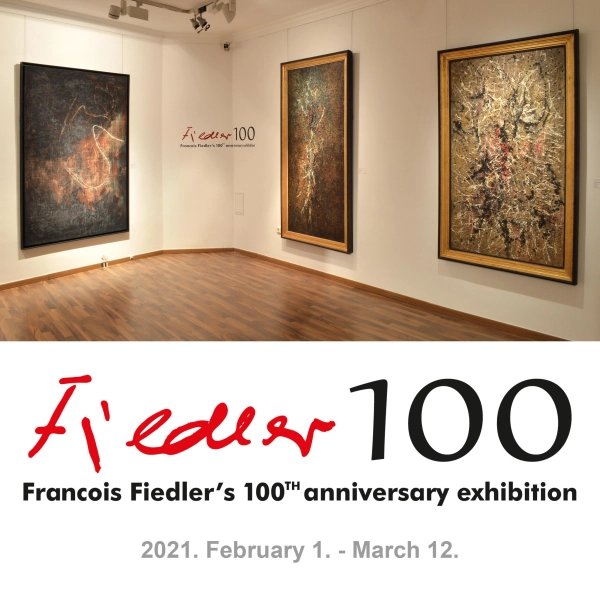
„FIEDLER 100”
Száz éve 1921. február 15.-én született Fiedler Ferenc azaz Francois Fiedler az absztrakt expresszionizmus kiemelkedő képviselője. Tiszteletére a Kálmán Makláry Fine Arts galériában centenáriumi kiállítás nyílik.
A galéria közel tíz éve gondozza a művész munkásságát nemzetközi és hazai téren egyaránt.
Fiedler Kassán látta meg a napvilágot, majd később Nyíregyházán nevelkedett. Ötévesen már Leonardo da Vinci és Caravaggio festményeit kezdte másolni, tízévesen pedig felnőtt művészekkel együtt állított ki. A negyvenes években aktívan dolgozott, több alkotását is megvásárolta a magyar állam, ezek a figuratív művek ma is a Szépművészeti Múzeum – Nemzeti Galéria gyűjteményét gyarapítják.
A Magyar Királyi Képzőművészeti Főiskola festő szakán Szőnyi István volt a mestere, ahol olyan művészekkel kötött életre szóló barátságot, mint Reigl Judit, Hantai Simon és Paul Hargittai. Művésztársaihoz hasonlóan a negyvenes évek végén az elszigetelődő Magyarországot elhagyva Franciaországot választotta új otthonának.
Párizsban szinte azonnal felhagyott a figurális festészettel és teljes mértékben az absztrakció felé fordult. A tasizmus és a gesztusfestészet kezdte inspirálni. A gesztusfestészet eszköztárát sajátos ötvözetben jeleníti meg alkotásain, melyeken jól érzékelhetőek Hans Hartung, Jean-Paul Riopelle, Jackson Pollock, Mark Rothko hatásai.
1950-ben, ismerkedett meg a szürrealizmus katalán nagymesterével, Joan Miróval. Miró egy képkeretező kirakatában pillantotta meg egyik munkáját, amely nagy hatással volt rá, ezért pártfogásába vette a „fények festőjét”, ahogy elnevezte Fiedlert. Olyan művészekkel ismertette össze, mint Alexander Calder és Marc Chagall, és ő volt az, aki bemutatta a neves galéria tulajdonosnak, Aimé Maeghtnak. Fiedler ettől kezdve a Galerie Maeght exkluzív művésze lett és a XX. század modern művészetének olyan nagy mestereivel állított ki rendszeresen, mint Braque, Chagall, Calder, Giacometti, Kandinszkij, Miró, Matisse, Picasso, Riopelle, Tápies.
A centenáriumi kiállítás főleg az 50-es és 60-as évekbeli alkotói periódusára fókuszál és több olyan alkotás is bemutatásra kerül, amelyek Magyarországon még soha nem voltak kiállítva.
François Fiedler nyolcvan éves korában hunyt el 2001-ben, gazdag, befejezett életművet hagyva maga után. 2012-ben Jackson Pollock születésének centenáriuma alkalmából New York-ban, az amerikai festőművész egykori műterem-házában tizenhárom nagynevű művész alkotásaiból megrendezték a "The Persistence of Pollock" – Pollock továbbélése – című tárlatot, közöttük az egyedüli európai festő François Fiedler volt.
A kiállítás 2021.02.01.- 03.12-ig látogatható.
FIEDLER 100: Celebrating the Centenary of François Fiedler
One hundred years ago, on 15 February 1921, François Fiedler (born Ferenc Fiedler) was born—an outstanding figure of post-war abstraction and a distinctive voice within the international movement of Abstract Expressionism. To commemorate the centenary of his birth, the Kálmán Makláry Fine Arts Gallery presents Fiedler 100, a major exhibition dedicated to the artist’s extraordinary legacy.
For nearly a decade, the gallery has been committed to researching, preserving, and presenting Fiedler’s oeuvre both in Hungary and on the international art scene, contributing significantly to the renewed recognition of an artist whose work occupies an important place within twentieth-century European abstraction.
Born in Košice and raised in Nyíregyháza, Fiedler demonstrated an exceptional artistic sensibility from an early age. At only five years old, he was already studying and copying works by masters such as Leonardo da Vinci and Caravaggio, and by the age of ten he was exhibiting alongside established artists. During the 1940s, he developed a successful early practice, and several of his figurative works were acquired by the Hungarian state. These paintings remain part of the collections of the Museum of Fine Arts, Budapest and the Hungarian National Gallery, preserving the early chapter of his artistic journey.
At the Hungarian Royal Academy of Fine Arts, where his master was István Szőnyi, Fiedler formed lifelong friendships with fellow artists including Judit Reigl, Simon Hantaï, and Paul Hargittai. Like many of his generation, he left an increasingly isolated Hungary at the end of the 1940s and chose France as the centre of his artistic and intellectual life.
Upon arriving in Paris, Fiedler rapidly abandoned figurative representation and devoted himself entirely to abstraction. He became deeply engaged with the principles of Tachisme and gestural painting, transforming the language of spontaneous gesture into a highly personal visual vocabulary. His works reveal an ongoing dialogue with the radical innovations of artists such as Hans Hartung, Jean-Paul Riopelle, Jackson Pollock, and Mark Rothko, while maintaining a unique sense of luminosity and material presence.
A decisive moment in Fiedler’s career came in 1950, when he met Joan Miró, one of the great masters of Catalan Surrealism. Miró discovered one of Fiedler’s paintings in the window of a framing shop and, deeply impressed by the work, became a mentor and supporter of the artist he would later describe as the “painter of light.” Through Miró, Fiedler was introduced to leading figures of the international avant-garde, including Alexander Calder and Marc Chagall, and was presented to the influential gallery owner Aimé Maeght.
From this point onward, Fiedler became an exclusive artist of the Galerie Maeght, exhibiting alongside many of the defining masters of twentieth-century modernism, including Georges Braque, Alberto Giacometti, Wassily Kandinsky, Henri Matisse, Pablo Picasso, and Antoni Tàpies.
The centenary exhibition focuses primarily on Fiedler’s defining creative period of the 1950s and 1960s, presenting a selection of works that reveal the depth of his abstract language and the evolution of his unique approach to colour, gesture, and light. Several works included in the exhibition are being presented in Hungary for the first time.
François Fiedler passed away in 2001 at the age of eighty, leaving behind a mature and complete artistic legacy. His contribution to post-war abstraction continues to receive international recognition. In 2012, on the occasion of the centenary of Jackson Pollock’s birth, Fiedler was the only European artist included in the exhibition The Persistence of Pollock, held in Pollock’s former studio-house in New York and bringing together works by thirteen major artists reflecting the continuing influence of Pollock’s artistic vision.
Fiedler 100 offers a renewed encounter with an artist whose luminous, deeply personal abstraction bridges European and American approaches to modern painting and confirms his place among the significant voices of twentieth-century art.
